e1. Introducing the Grazing Grass Podcast and Myself
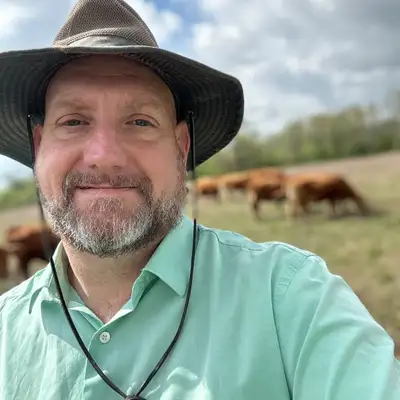
Welcome to the Grazing Grass Podcast—helping you produce forages for livestock grazing. I'm your host, Cal Hardage, and today I’m introducing the podcast, why it exists, and a little about my background.
I love podcasts. When I looked for shows focused specifically on becoming a better grass farmer, nothing quite fit the niche I wanted. Some podcasts touched on grazing, but none centered on forage production the way I needed. So I decided to start one.
The future plan is to interview a grass farmer each week to learn about their operation, challenges, and successes. While I’m developing the workflow, episodes will begin biweekly and later move to weekly.
If you're a grass farmer or know someone who would make a good guest, email me at cal@grazinggrass.com.
A little about me: I’m not an expert, but I’m learning. I grew up on a beef operation, and one of my earliest memories is checking a baby calf—and being pushed back into the truck by the mama cow. Since then, I’ve held a personal grudge against Angus, though I know many people use them successfully.
My family started dairying when I was a teenager. After earning an Animal Science degree from Oklahoma State University, I returned home to dairy with my parents. Eventually we sold the dairy and returned to beef cattle. I later moved into education and now work in technology, farming evenings and weekends.
I don’t consider this a “hobby farm.” I expect every animal to earn a profit, and grass farming is how I pursue that. We raise Kiko goats, hair sheep, and around 50 limousine cows, aiming to grow both the sheep and cattle herds to around 60 head each.
We graze 240 acres divided into about a dozen paddocks. I rotate livestock according to forage availability. The cattle move weekly, though I hope to return to daily moves once I repair my electric fencing.
Our forages include Bermuda grass, fescue, Ladino and sweet clovers, lespedeza, and a bit of Johnson grass. Lespedeza helps with parasite control for goats and sheep. Johnson grass is fine unless conditions are hot and dry.
Sheep fencing varies. Some areas have goat wire and barbed wire and hold them well. Other areas rely on five-wire fences which sometimes work depending on wire height. Goats are trickier; only a few pastures reliably hold them.
I’ve used electric netting for goats and four-wire electric fence works, but daily moves are difficult time-wise. I use a Stafix charger and like Greg Judy’s approach to land leasing and grass farming.
We discovered that rotating cattle greatly increased forage production. I’m still improving; I want fences set up so I can move cattle daily. Weekly moves can cause performance swings—high at the start when animals choose the best forage, and lower by week’s end.
As we wrap up, I want listeners to get to know me and understand the purpose of the podcast. Like BiggerPockets, I’m developing a set of recurring questions—the Famous Four.
My favorite grazing-related books: No-Risk Ranching and Comeback Farms by Greg Judy. I revisit them often. Land leasing is difficult in my area but those books keep me motivated.
Favorite tools: my T-post puller and my electric fence remote with fault finder. Being able to shut off power anywhere and locate shorts saves tremendous time.
Where to find me: grazinggrass.com, where we have community forums for graziers to connect. You can also find me at hedgeappleacres.com or on our social media pages.
I appreciate you joining me in this first episode. If you enjoyed it, please share and leave a review. Until next time, keep on grazing grass.
Creators and Guests